


Assessing Climate Risk, Framing Resilience, and Reporting Impact: A Guide for Climate Finance Practitioners
Physical climate hazards are intensifying. Droughts, floods, extreme heat, storms, and sea level rise pose increasing threats to livelihoods, infrastructure, business assets, and supply chains worldwide. To remain viable and effective, all investment vehicles must embed climate risk management into their design and execution. New finance vehicles will also be needed to mobilize capital at scale to solutions that proactively build resilience to these hazards.
Since 2015, Climate Policy Initiative (CPI)’s Global Innovation Lab for Climate Finance (the Lab) and the Catalytic Climate Finance Facility (CC Facility) have supported the development and implementation of more than 40 adaptation-relevant financial vehicles. Because adaptation benefits are context-specific, these vehicles were designed and implemented in close collaboration with local stakeholders, drawing on their knowledge of local markets, institutions, and ecosystems to address specific climate risks. CPI has also helped non-adaptation-specific vehicles create practical frameworks for assessing and managing their climate risk to improve bankability.
Informed by over a decade of work with these vehicles, this guide supports funders, investors, implementers, and technical partners working on climate finance vehicle structuring and implementation to manage climate risk and design investments with material improvements to resilience. Users of the guide may include fund managers establishing a new equity fund, coalitions of actors issuing climate-related bonds, or other implementers of private sector vehicles seeking to mobilize capital for climate projects. This guide is most relevant to leadership teams shaping and articulating climate risk management strategies, and for those responsible for impact measurement and reporting.
This guide’s support is structured around three core goals:
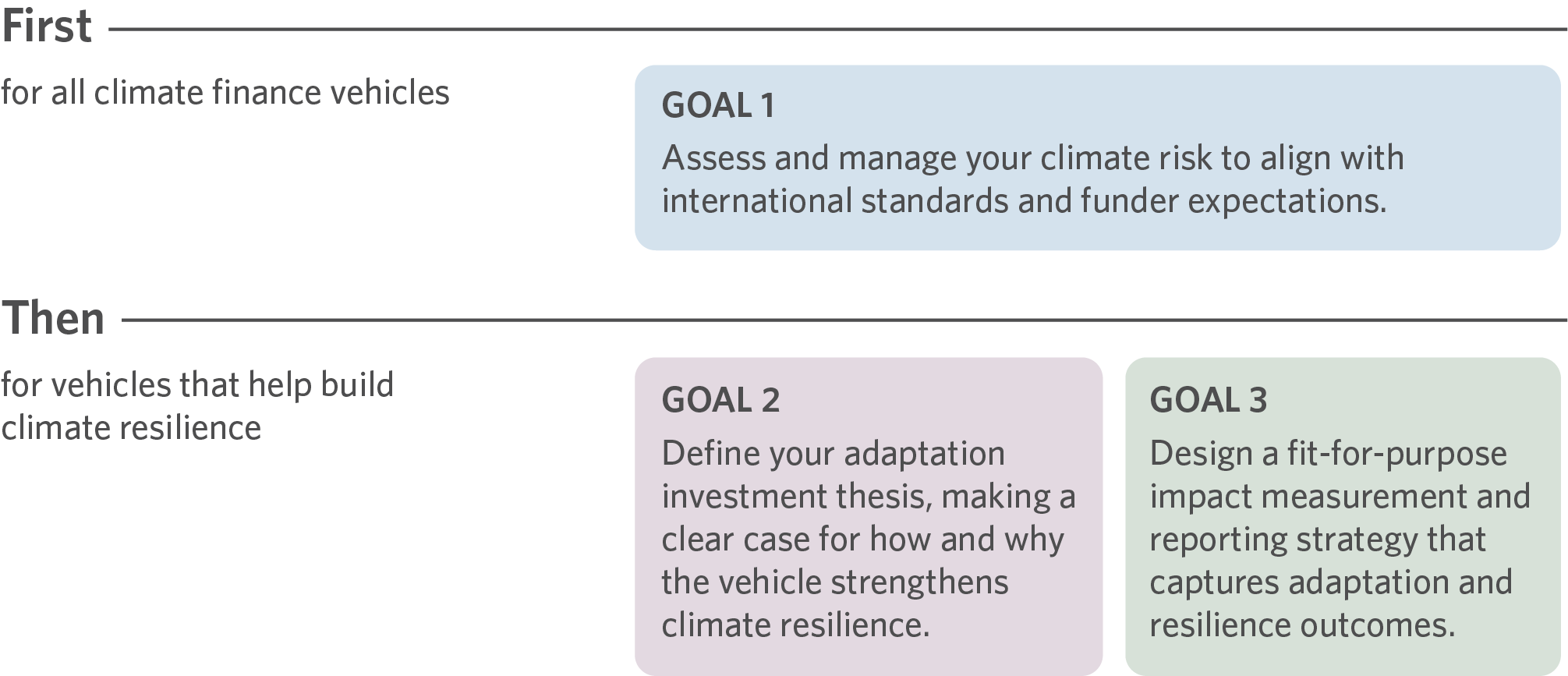
Explore the guide for more tips on how best to build financial vehicles that effectively manage climate risk and build resilience to climate hazards.
For further information on this publication, reach out to the report authors: Morgan Richmond, Liam Maguire, and Pallavi Sherikar.
