

Climate Finance Needs and Roadmaps
Despite annual climate finance reaching USD 2 trillion in 2024, a fourfold increase is required to reach the level of investment needed through 2030 under the 1.5°C scenario. A large and persistent climate investment gap remains particularly in emerging markets and developing economies. Accurately assessing the size of this global climate finance gap and understanding the role that different types of investors and capital can play in different markets can enable decision-makers to mobilize finance effectively, quickly, and to where it is most needed.
Needs
CPI compiles and standardizes data on climate finance needs from a wide variety of sources to provide the most comprehensive overview of the size of the climate finance gap to date. Timely and accurate information on climate finance needs is key to creating awareness among public and private investors as well as policymakers and ensuring that climate investments are channeled toward those sectors and countries that display the largest funding gaps. We distinguish between two types of finance needs to keep global temperature rises within 1.5°C: top-down and bottom-up.

Top-down needs
Estimated investment needed to keep global temperature rises within 1.5°C, typically derived using predictive models.
Top-down climate finance needs
Bottom-up needs
Investment required by countries to reach their national climate targets, including both finance to be raised domestically and international support.
Bottom-up climate finance needsRoadmaps
To close the current investment gap, available capital needs to be deployed effectively such that the right type of finance can reach the right markets. While extensive literature exists on climate investment barriers and risks in underserved markets, there is a lack of research on the actors and actions required to close the identified finance gaps in different sectors and geographies. This limits the potential for coordinated action to increase the scale of climate investments quickly and ensure an effective use of public and private, domestic and international resources.
CPI’s Climate Finance Roadmaps aim to inform on which financial actors and what types of capital can best close the investment gap in different sectors and geographies. They can also help to identify and prioritize policy and regulatory interventions to overcome investment barriers and mobilize climate finance at scale.
Climate finance roadmaps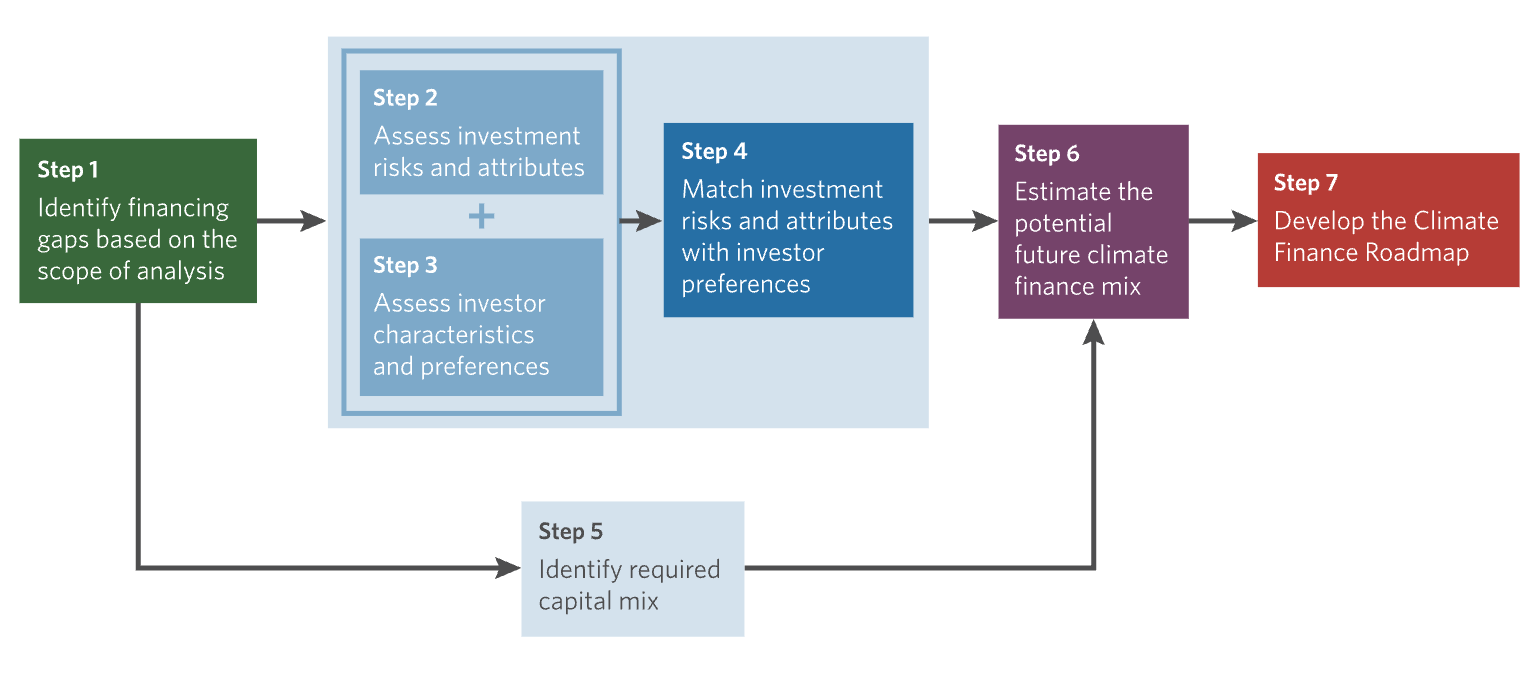
Data dashboards
- Top-down climate finance needs dashboard: Explore data covering mitigation climate finance required across different sectors to keep the average global temperature rise within 1.5°C by the end of this century.
- Bottom-up climate finance needs dashboard: Explore data covering the climate finance required by countries to reach their national climate targets, as stated in official documents such as Nationally Determined Contributions (NDCs).