

COP30 Presidency Roadmap on Enhancing Efforts Towards Halting and Reversing Deforestation and Forest Degradation by 2030 Platform
COP30 Presidency Roadmap on Enhancing Efforts Towards Halting and Reversing Deforestation and Forest Degradation by 2030
A platform for updates and technical materials on the COP30 Presidency Roadmap on Enhancing Efforts Towards Halting and Reversing Deforestation and Forest Degradation by 2030, continuously updated as the process evolves—connecting global commitments, national implementation, and international cooperation.
“Our objective with the Roadmap is to move beyond commitments and advance implementation by providing a practical, action-oriented tool that countries can use to strengthen their domestic forest policies.”
Ambassador André Corrêa do Lago, COP30 President
ABOUT THE ROADMAP
The COP30 Presidency Roadmap on Enhancing Efforts Towards Halting and Reversing Deforestation and Forest Degradation by 2030 is an initiative of the COP30 Presidency to support the implementation of the first Global Stocktake (GST) under the Paris Agreement. Its objective is to translate forest-related outcomes into coordinated, country-led action while respecting different national circumstances, priorities, and implementation challenges.
The Roadmap does not create a new negotiation process nor seek to reopen agreed decisions. Instead, it aims to organize existing commitments, public policy instruments, financial mechanisms, and cooperation opportunities into a practical implementation framework through 2030. The initiative seeks to support countries in defining priorities, strengthening institutions, mobilizing finance, and accessing technical cooperation.
The document recognizes the diversity of forest realities, including challenges related to deforestation, forest degradation, restoration, sustainable forest management, bioeconomy, agroforestry systems, and conservation, while identifying shared lessons and cooperation needs.
Continuity through 2030 is a central element of the initiative. Halting and reversing deforestation requires sustained implementation, periodic milestones, alignment with NDCs, and connections with future international agendas, including COP31 and the second Global Stocktake.
The Roadmap is led by the COP30 Presidency, with Climate Policy Initiative (CPI) serving as Secretariat and technical partner.
-
Multi-stakeholder Process
The development process engages governments, international organizations, civil society, Indigenous Peoples, local communities, the private sector, financial institutions, and the scientific community.
-
Diverse Forest Realities
The Roadmap was designed to engage with diverse ecological realities, encompassing the world’s major forest biomes, including tropical and subtropical forests, temperate forests, boreal forests, and associated ecosystems such as mangroves and peatlands.
-
Practical Implementation
The Roadmap does not seek to reopen agreed decisions. Its purpose is to organize existing commitments, public policy instruments, and financial mechanisms into a practical implementation framework.
DOCUMENT STRUCTURE
PART I – WHY THIS ROADMAP IS NEEDED
The first section presents the rationale for developing a COP30 Presidency Roadmap on Enhancing Efforts Towards Halting and Reversing Deforestation and Forest Degradation by 2030.
Forests are essential for climate stability, biodiversity conservation, water regulation, food security, livelihoods, and sustainable development. Yet deforestation and forest degradation undermine these benefits, triggering interconnected risks that affect societies, economies, and ecosystems at the local, regional, and global levels.
Below are the three main categories of systemic risks associated with forest loss and degradation.

Physical Risks
Forests underpin climate stability, biodiversity conservation, water regulation, and ecosystem integrity. Deforestation, forest degradation, and climate change are weakening these essential functions, increasing vulnerability to extreme events and undermining the resilience of both natural and human systems.
Social Risks
Halting and reversing forest loss is inseparable from the rights of Indigenous Peoples and local communities, secure land tenure, livelihoods, food security, and inclusive implementation. Forest loss and degradation directly affect the rights, territories, livelihoods, and food security of millions of people, particularly Indigenous Peoples and local communities. They also exacerbate inequalities, fuel criminal activities, intensify conflicts and displacement, making rights-based and inclusive implementation essential to advancing security, prosperity, and sustainable development.

Economic Risks
Forest loss creates macroeconomic, supply chain, and infrastructure risks, while forest protection can support productive and resilient economies. Forests are high-value economic assets. They generate income and jobs, sustain productive activities, provide essential ecosystem goods and services, and create opportunities for a sustainable bioeconomy. Their loss undermines these benefits, increases risks to supply chains, infrastructure, and markets, and imposes growing costs on governments, businesses, and societies. Protecting, restoring, and sustainably managing forests is therefore an investment in more resilient, competitive, and prosperous economies.
PART II – IMPLEMENTING THE GLOBAL STOCKTAKE THROUGH 2030
The second section is organized around two complementary dimensions: priority national actions and international enabling conditions.
NATIONAL ACTIONS
Following all the contributions we received, and in order to translate global commitments into concrete results, the Roadmap organizes national actions around five main dimensions: deforestation; forest degradation; restoration, reforestation, and afforestation; sustainable management of forests, bioeconomy, and agroforestry systems; and forest conservation.
For each dimension, the report presents key challenges, drivers of pressure, and examples of policies and instruments already adopted in different contexts. Rather than prescribing one-size-fits-all solutions, it offers a menu of approaches that can be adapted to the realities, capacities, and priorities of each country.
Deforestation
Deforestation is concentrated and driven
by diverse forces; a policy toolkit exists
but political durability is a key risk.
Forest Degradation
Forest degradation is a major and underaddressed source of emissions that requires its own strategy, clearer definitions, stronger monitoring, and specific responses.
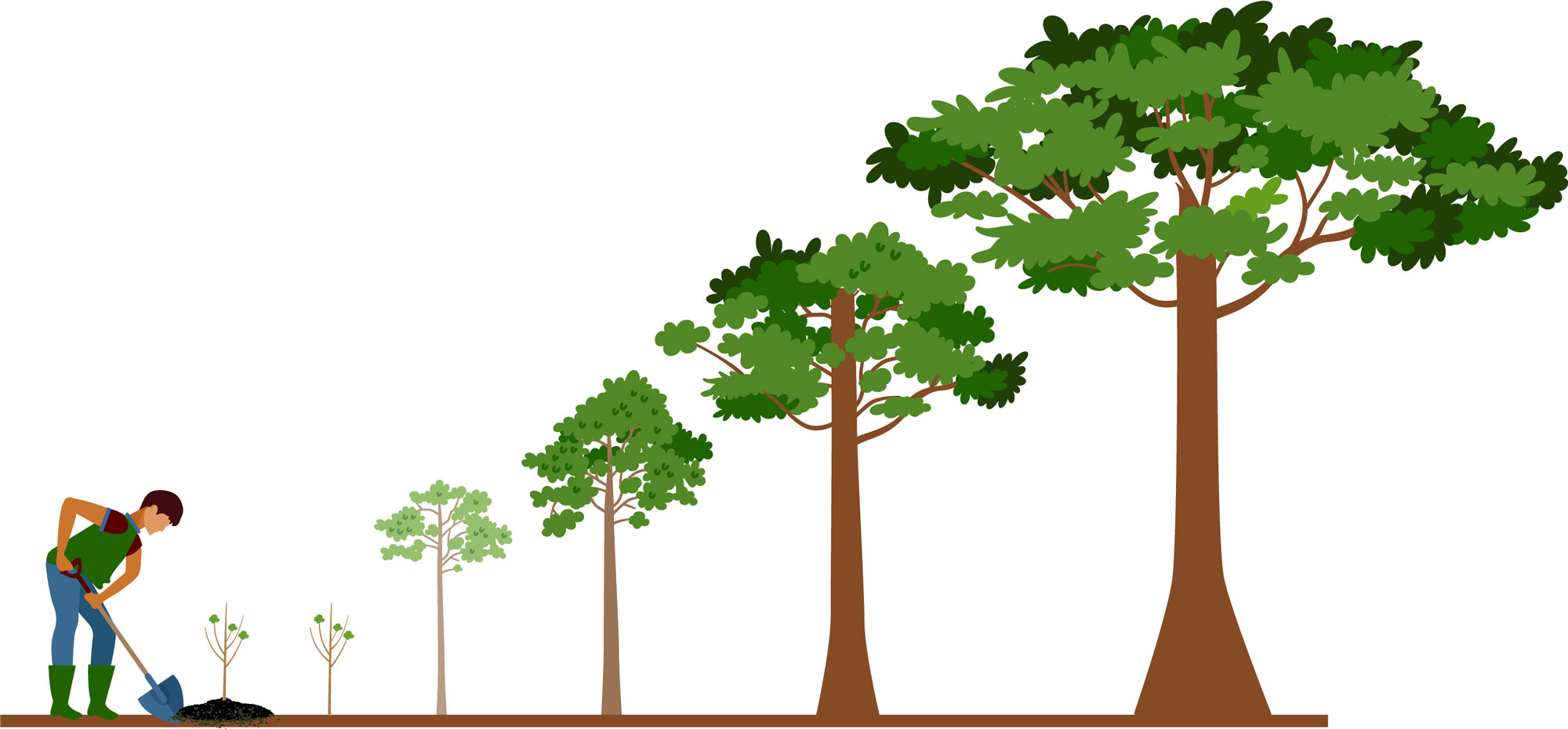
Forest Restoration, Reforestation
and Afforestation
Restoration is one of the strongest near-term climate opportunities, but scale depends on ecological quality, ecosystem fit, local governance, and durable finance.
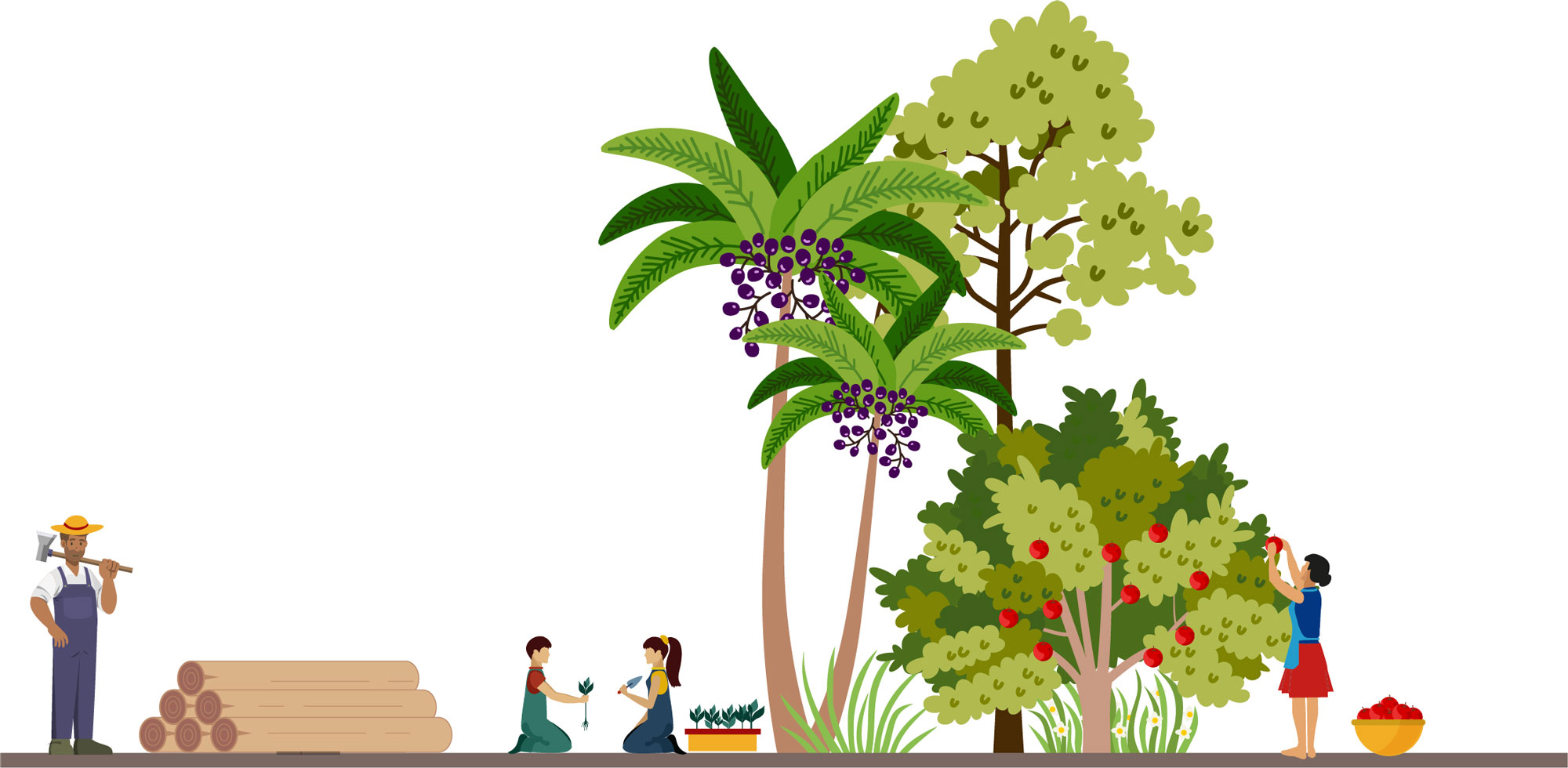
Sustainable Management of Forests,
Bioeconomy, Agroforestry
Sustainable forest use should be treated as a structural solution,
with agroforestry, social forestry, sustainable practices of
indigenous peoples and local communities, and forest-compatible
production elevated as core strategies alongside protection.
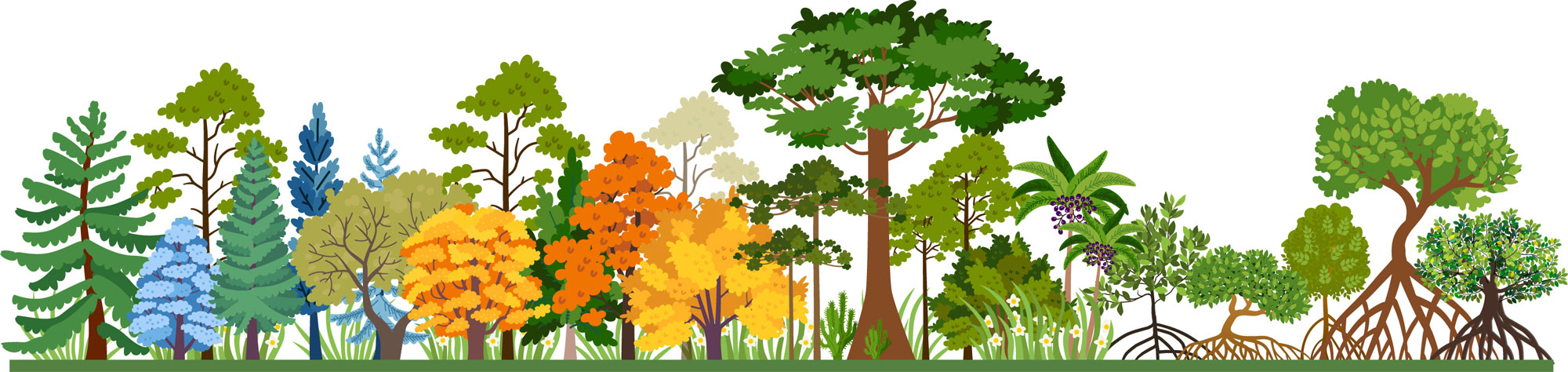
Forest Conservation
Standing forests should be treated as strategic assets whose
protection depends on governance quality, territorial models,
rights-based stewardship, and stronger finance.
INTERNATIONAL ENABLING CONDITIONS
Effective implementation of forest actions depends not only on national efforts, but also on a supportive international environment. For this reason, the Roadmap highlights three complementary areas: technical cooperation, capacity building, and institutional strengthening; finance, markets, and partnerships; and international regulatory and institutional arrangements.
Together, these areas help countries access knowledge, resources, and governance tools, promoting greater alignment between national and international efforts and strengthening the ability to translate commitments into concrete action at scale.
Technical Cooperation, Capacity
Building, Institutional Strengthening
Implementation will require more interoperable monitoring systems, stronger delivery institutions, and practical cooperation platforms anchored in existing multilateral infrastructure.
Finance, Markets,
Partnerships
Forest action needs a more
fit-for-purpose financial architecture
that combines results-based finance,
market integrity, direct access, and
long-term stewardship instruments.
International Regulatory and Institutional Adjustments and Improvements
International rules need to better align
trade, due diligence, legality, crime
prevention, and rights protection with the
goals of halting and reversing forest loss.
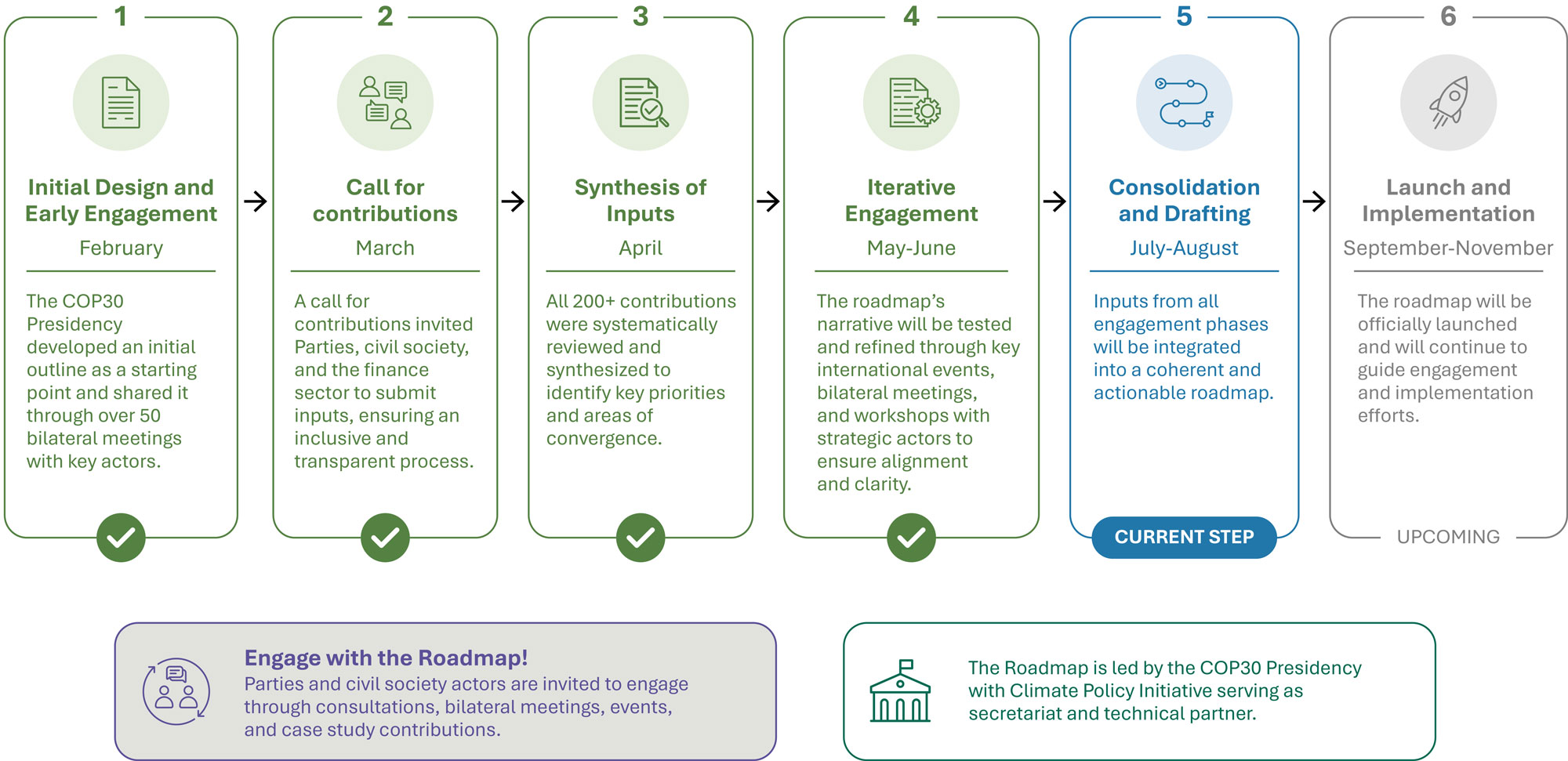
Development Process
MATERIALS AND RESOURCES
This page serves as a central hub for the main materials developed to support the COP30 Presidency Roadmap on Enhancing Efforts Towards Halting and Reversing Deforestation and Forest Degradation by 2030.
It will be continuously updated as the process evolves.
Presentation at UNFF21 (May 2026)
Presentation at SB64 in Bonn (June 2026)
Presentation at London Climate Action Week (June 2026)
Outreach Meeting for COP30’s Roadmap on Halting and Reversing Deforestation and Forest Degradation by 2030
More Materials Coming Soon
This platform will be continuously updated as consultations, workshops, and events take place throughout 2026.
