


Where is India Most Ready for Wind Repowering? Assessing opportunities across India’s leading wind states
Why wind repowering, why now?
As India seeks to more than double its wind power capacity by 2035, repowering high-potential, underutilized sites will be as crucial as developing lower-potential greenfield sites.
Many existing wind installations are concentrated in high-wind-resource states, supported by favorable policies such as accelerated depreciation and generation-based incentives. However, most sites are occupied by aging, low-capacity turbines with lower hub heights, smaller rotor diameters, and suboptimal energy yields – often underutilizing the available wind resource and land. Some wind turbines no longer meet modern grid requirements, raising safety concerns, while others have reached or are approaching the end of their design life.
Wind repowering offers a plausible path for India to increase its installed wind power capacity from 58 GW as of July 2026 (MNRE 2026) to 155 GW by 2035 to meet its Nationally Determined Contribution targets (CEA 2026). Increasing generation at existing sites, optimizing land and infrastructure use, and deploying grid-compliant technology could help meet installation targets. Recognizing the need for wind repowering, the Ministry of New and Renewable Energy (MNRE) issued the National Wind Repowering Policy in 2023, which defines wind repowering and enumerates relevant provisions.
Replacing existing wind turbines that are non-compliant, have completed their design life, are below 2 MW, or are over 15 years old, with newer wind turbines to enhance the annual generation by at least 1.5 times (MNRE 2023)
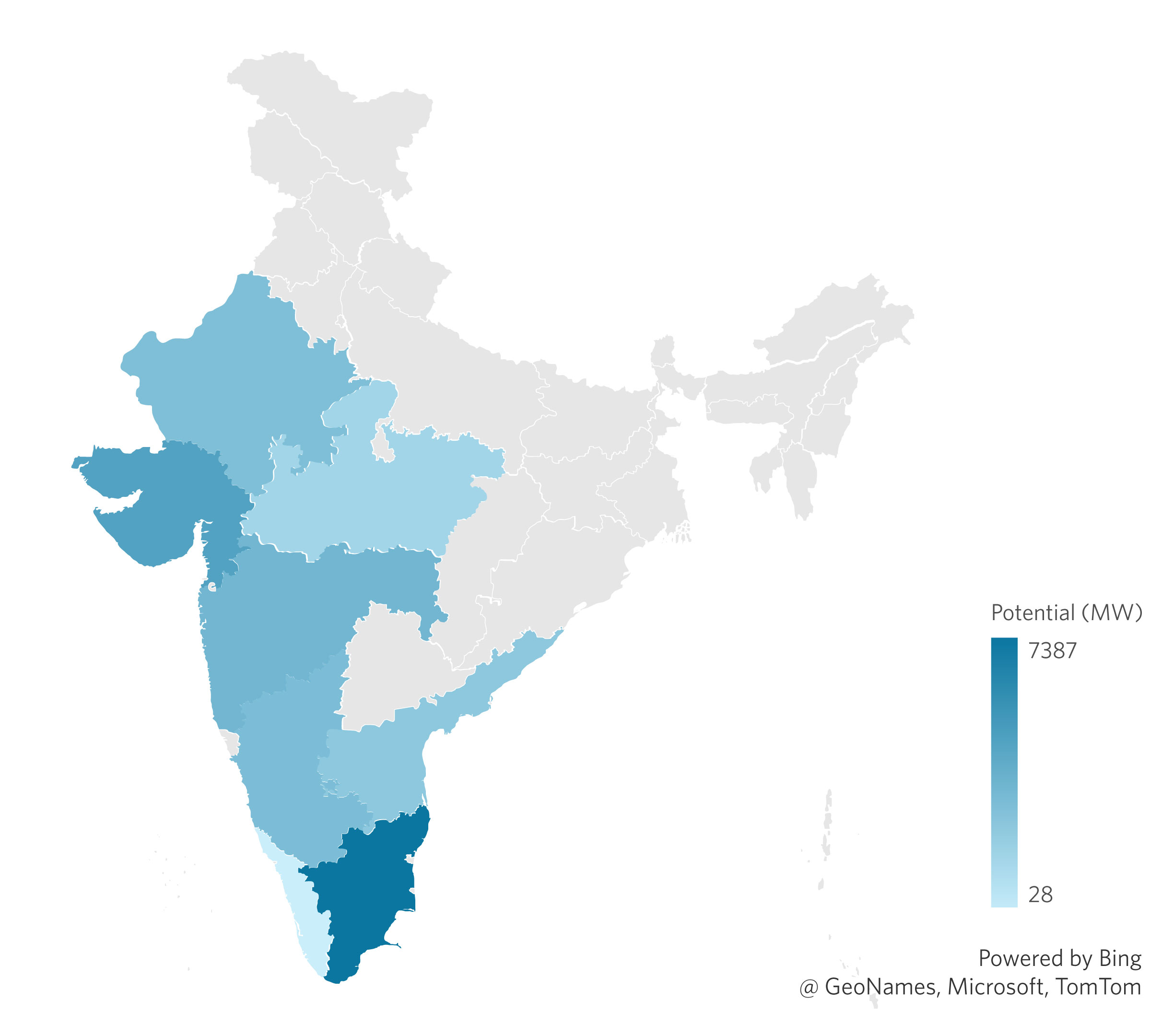
Source: NIWE (MNRE 2023)
India has a significant wind repowering opportunity. The National Institute for Wind Energy (NIWE) estimates that India has around 25.4 GW of repowering potential across eight states, considering wind turbines of capacity below 2 MW (MNRE 2023). Tamil Nadu (29%), Gujarat (18.4%), Maharashtra (13.5%), and Karnataka (11.9%) account for a large share of the repowering potential.
How ready are Indian states for repowering?
Realizing India’s repowering potential depends on technical, commercial, regulatory, and institutional conditions that vary considerably across states. Understanding these conditions requires a dedicated assessment to give stakeholders a sense of each state’s relative readiness and context-specific considerations.
CPI and our knowledge partner, Idam Infrastructure Advisory Pvt. Ltd., conducted a state-level assessment of the top seven windy states, evaluating them based on factors essential for repowering. Maharashtra, Gujarat, and Tamil Nadu emerge as more ready, though each offers different enablers and key considerations to navigate. The following sections describe the parameters assessed, the state rankings, and the enablers and key considerations for each state.
Readiness parameters
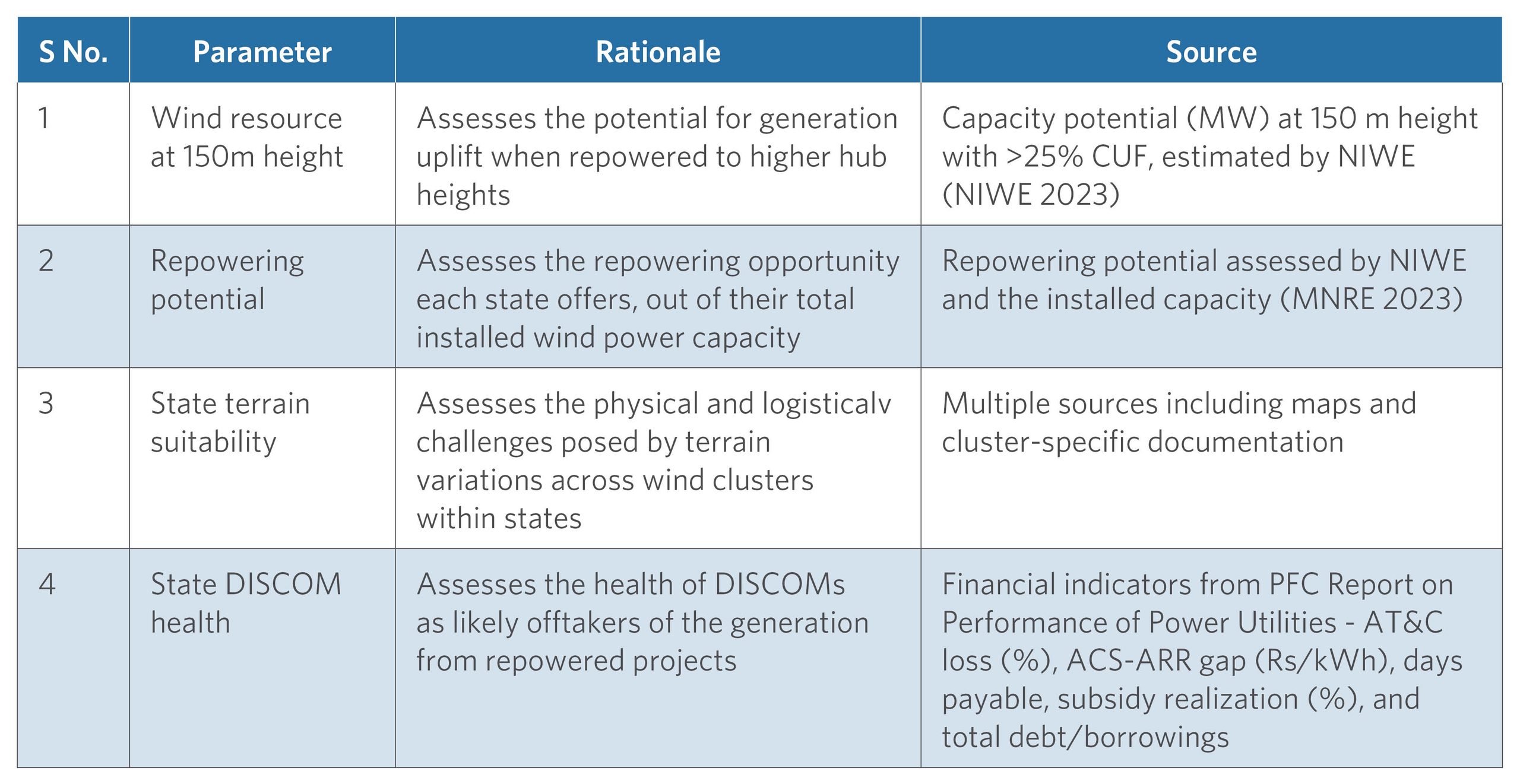
Assessing readiness requires examining a wide range of technical, institutional, policy, and financial parameters to identify each state’s enablers. For the ranking, only quantifiable parameters with uniformly available data across all seven states were considered, narrowing to the following four parameters:
Ranking the states
The scoring analysis incorporates data from publicly available sources for the four parameters – wind resource at 150 meters, repowering potential, state terrain suitability, and health of state DISCOM(s). The table below shows each state’s standing across these parameters and its overall ranking.
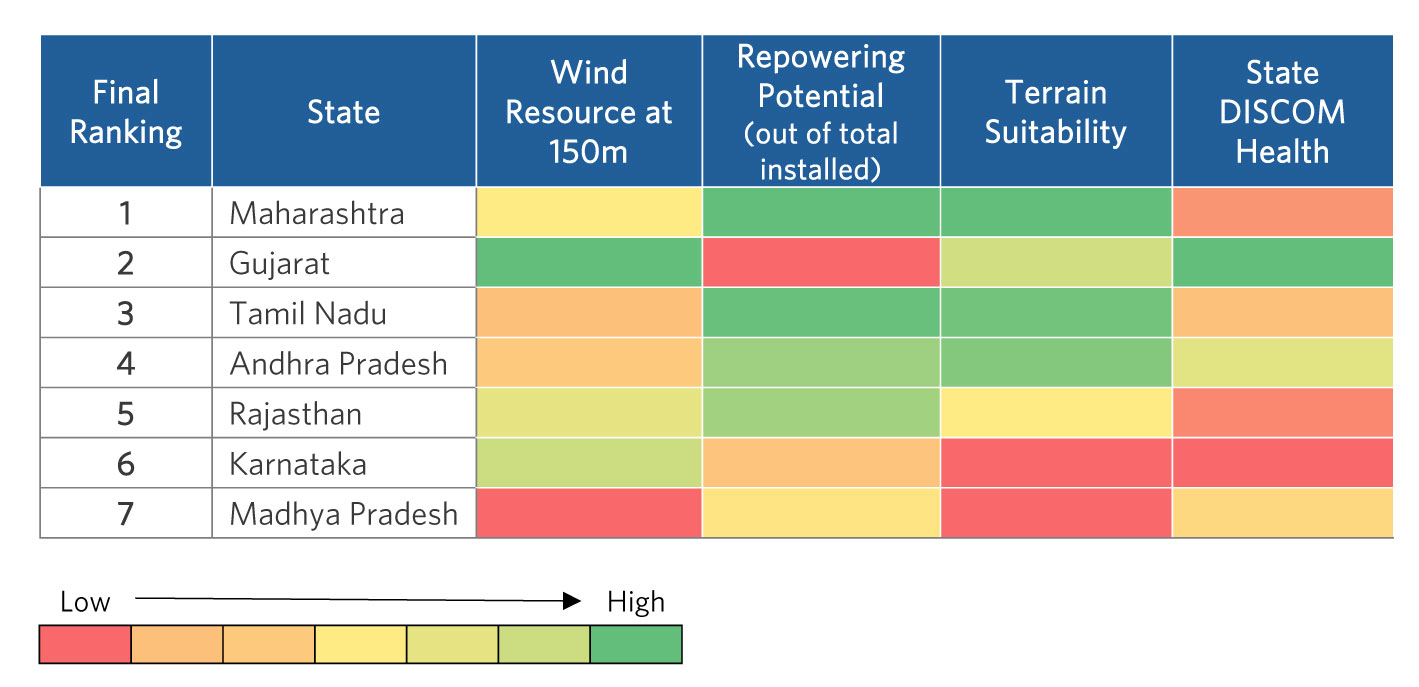
Note: States were ranked on a normalized scale, based on a weighted average score computed across the four parameters, with weights derived using a simplified Analytic Hierarchy Process
The assessment ranks Maharashtra highest for readiness, followed by Gujarat and Tamil Nadu. Andhra Pradesh, Rajasthan and Karnataka follow, while Madhya Pradesh ranks the lowest in the readiness rankings. National-level consultations with public and private stakeholders broadly reinforced these findings, with stakeholders suggesting Maharashtra and Tamil Nadu for further study, citing the larger concentration of old turbines in these states, regardless of total installed capacity.
What shapes repowering readiness?
The assessment highlights variation in state readiness. Each demonstrates distinct enablers and barriers for wind repowering.
Maharashtra is the frontrunner in this assessment, but it must navigate land and fragmentation factors. The state has an installed capacity of 6.4 GW (MNRE 2026) and a repowering potential of 3.43 GW. Identified clusters include Satara, Sangli, Dhule, and Osmanabad.
- Enablers: The state has an established wind ecosystem, grid infrastructure, and strong potential for wind-solar hybrid projects. Recent policy measures, including a dedicated repowering incentive, strengthen the environment.
- Key considerations: Undulating terrain may require improvements to site access and foundation work, with implications for logistics and installation. Fragmented turbine and land ownership adds to aggregation complexity. Legacy Power Purchase Agreements (PPAs) and the DISCOM’s relatively weak financial position add to commercial uncertainty.
Gujarat is a wind leader with strong repowering potential; however, it needs to extend policy focus beyond solar to realize it. The state has 16.6 GW of wind capacity (MNRE 2026), with a significant share being recent installations. Nevertheless, it has a wind repowering potential of 4.67 GW. Major clusters include Kutch, Morbi, Saurashtra, and Rajkot.
- Enablers: A strong wind resource, relatively flat terrain, a robust supply chain, expanding grid infrastructure, and financially healthy DISCOMs provide favorable conditions for repowering.
- Key Considerations: Environmental sensitivities in coastal areas, national security considerations, and rising grid congestion in high-potential renewable energy zones could constrain developments. A shift in policy focus from solar would also be required to position the state for repowering better.
Tamil Nadu is a wind pioneer with the highest repowering potential, which coordinated aggregation and modernization can unlock. The state has an installed capacity of 12.3 GW (MNRE 2026) and a repowering potential of about 7.4 GW. Identified wind clusters in Tamil Nadu include Kanyakumari, Tirunelveli, Thoothukudi, and Tiruppur, consisting of Type I/II/III wind sites.
- Enablers: High-quality wind resource, established wind industry ecosystem, cohesive policy environment, and incremental repowering initiatives provide a favorable foundation for repowering.
- Key considerations: Fragmented land ownership, legacy PPAs, and a relatively weaker DISCOM profile bring in project & commercial complexities. Grid augmentation, congestion, and curtailments have been observed to impact the repowering initiatives.
Andhra Pradesh presents an emerging opportunity and requires more coordination among stakeholders. The state has an installed capacity of 4.5 GW (MNRE 2026) and a repowering potential of 2.37 GW. Major clusters identified are Anantapur, Kurnool-Pinnapuram, Molagavalli, and Kadapa.
- Enablers: Large cluster size, suitability for hybrid projects, and growing industrial demand increase the possibilities for repowering. Relatively stable DISCOM finances support the state’s readiness in this assessment.
- Key considerations: The terrain conditions vary significantly across clusters, requiring a bespoke repowering strategy. Grid infrastructure is improving but requires further strengthening to support repowering penetration.
Rajasthan is a resource-rich market with moderate repowering potential, although broader transmission constraints may affect project viability. The state has installed wind capacity of 5.5 GW (MNRE 2026) and 2.9 GW of repowering potential. Identified clusters include Barmer, Jaisalmer, and Bhadla.
- Enablers: High wind resource, large contiguous land parcels, and a mature RE ecosystem provide favorable conditions for repowering. Land availability and the potential for wind-solar hybrid projects are particularly important advantages.
- Key considerations: Transmission congestion & curtailment with increasing renewable energy in the state lower the attractiveness for repowering. The sandy terrain may require reinforced foundation design & cost considerations. Environmental considerations and moderate DISCOM health could affect the possibilities. Policy/regulations require more clarity & dedicated provisions for repowering.
Karnataka has promising wind repowering potential, but dispersed wind sites could complicate execution. The state has an installed capacity of 8.9 GW (MNRE 2026), and 3 GW of repowering potential. Wind power clusters are widely distributed across Bijapur, Gadag, Chitradurga, Belagavi, and other areas.
- Enablers: Robust ridge-based wind corridors and suitability for wind-solar hybrid projects support the state’s repowering potential. Proximity to the industrial base supports execution and logistics.
- Key considerations: Dispersed clusters and complex terrain increase project development complexities. Fragmented land ownership, localized grid augmentation requirements, and DISCOMs’ relatively weak position may constrain implementation.
Madhya Pradesh offers a smaller repowering potential. The state has installed wind capacity of 3.7 GW (MNRE 2026) and 1.6 GW of repowering potential. Installations are concentrated in the western part of the state, in areas including Ratlam, Dhar, Dewas, and Mandsaur.
- Enablers: The state has lower terrain complexities and moderate land suitability. An emerging renewable energy market offers potential for wind-solar hybrid projects.
- Key considerations: Compared to the states above, lower wind resources and a smaller share of legacy assets limit the potential for repowering. Variation in grid infrastructure across clusters, moderate DISCOM health, and greater seasonal wind variability are critical considerations at present.
Next steps
India’s wind repowering opportunity is substantial, but various factors determine where interventions can be most effective. This state-level assessment has explored what will shape progress across states and gives a sense of their relative readiness. Maharashtra’s combination of wind resources, existing infrastructure, and policy support positions it well for further research.
This blog is the first in CPI’s series exploring “Repowering High Potential–Low Utilization Wind Sites”, looking at possible business and financing strategies to accelerate adoption of wind repowering in India. Building on these findings, the next step will be a deep dive into Maharashtra’s readiness and a site-level assessment of some high-potential sites in the state, examining factors such as land and ownership structure, grid evacuation capacity, and legal and contractual arrangements, among others.
