


Operationalizing JETP Just Transition Standard 9 in Maluku
Indonesia’s transition from diesel-based power to renewable energy is a critical step toward achieving its climate goals. However, replacing technology alone is not enough. Ensuring that workers, local economies, and vulnerable communities benefit from this shift is essential to delivering a just energy transition. Centered on Standard 9 of Indonesia’s Just Energy Transition Partnership (JETP), which focuses on Economic Diversification and Transformation, this report examines how energy transition investments can support livelihoods, strengthen local economies, and build long-term resilience in remote regions.
The analysis draws on case studies from Air Buaya and Pasir Putih in Maluku Province, two diesel-dependent communities with distinct economic profiles. The planned de-dieselization in Air Buaya — by replacing diesel-powered generators with renewable energy power plants — is raising concerns about workforce transition. Meanwhile in Pasir Putih, a coastal fishing village, inadequate power supply and cold-chain infrastructure have severely limited the productivity and profitability of the local fisheries sector. Together, these cases demonstrate why tailored, place-based approaches are essential for operationalizing just transition principles.
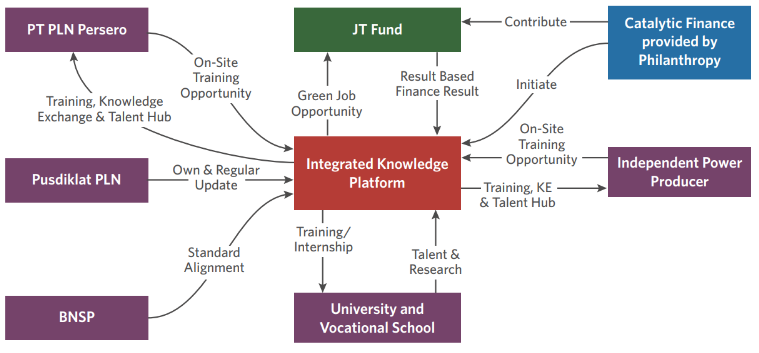
For the workforce in Air Buaya, CPI proposed the Self-Sustaining Workforce Transition Model with an Integrated Knowledge Platform that is designed as a centralized, long-term mechanism to support the development of skilled labors for renewable energy deployment.
Figure 1. Envisioned arrangement of a self-sustaining knowledge platform for workforce transition
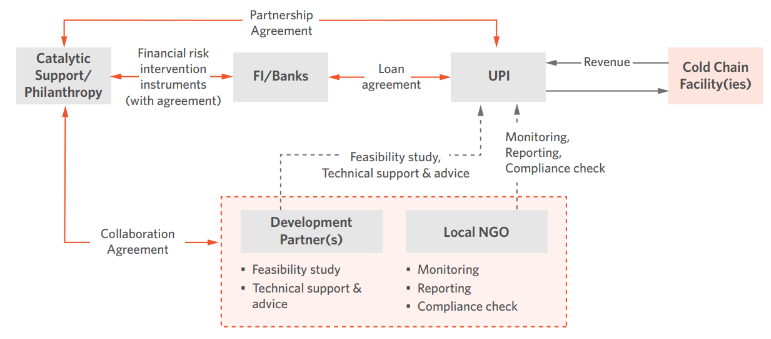
The Phased Operationalization Strategy is accordingly prescribed to resolve the energy access constraints in Pasir Putih. This includes catalytic grants, derisking instruments for high-risk areas, and derisking instruments for moderate-risk areas to develop renewable energy powered cold chain infrastructure in the village.
Figure 2. Grant window arrangement in Phase 1
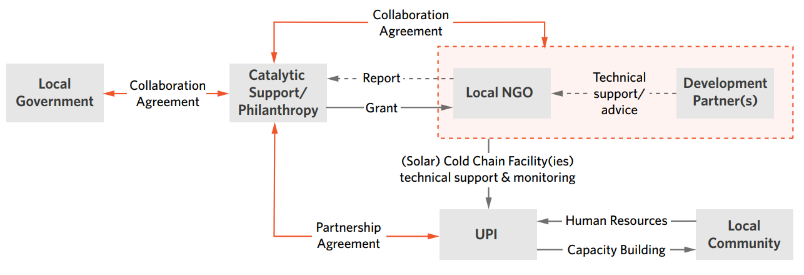
Figure 3. Phase 2 and 3 investment arrangement
Across both cases, the report highlights the role of financial institutions, philanthropic capital, and development partners in translating Standard 9 into action. By aligning workforce retraining with renewable energy deployment and mobilizing phased financing for productive-use infrastructure, the report shows how just transition can serve as a catalyst for inclusive growth while accelerating renewable energy deployment in Indonesia’s remote regions.
