


Financing the sustainable livestock transition in Latin America
Last October, CLIC hosted a panel on our report outlining a roadmap for financing sustainable livestock systems in Latin America and the Caribbean (LAC). The discussion, held at the FAO Global Conference on Sustainable Livestock Transformation in Rome, revealed a major disconnect among agricultural stakeholders. While ranchers and agronomists in the room understood that investing in silvopastoral systems is critical for a sustainable transition, investors remained unconvinced.
The disconnect wasn’t about whether silvopastoral systems deliver climate benefits, but the underlying risk-return profile and inherent complexity that deters investors from financing a sustainable livestock transition.
This disconnect matters because the sector is critical to LAC. The livestock sector drives 75% of deforestation and 28% of greenhouse gas emissions in the region, yet remains essential to millions of farmers’ livelihoods. At the same time, the region has 378 million hectares of degraded pastures ready for restoration. Projects across Colombia, Costa Rica, and Nicaragua demonstrate that integrating trees and other native vegetation into cattle operations increases productivity, sequesters carbon, and improves climate resilience. For example, Colombia’s Mainstreaming Sustainable Cattle Ranching project shows measurable gains in livestock productivity alongside ecosystem recovery.
Why traditional agriculture finance fails
We believe the problem isn’t the supply or demand for livestock finance, but a structural mismatch between the two.
Most agricultural finance operates on short-term debt instruments ill-suited for multi-year transitions. These traditional instruments tend to fail in silvopastoral transitions because upfront costs are significant, returns materialise over five to ten years, and commercial lenders lack familiarity with the production model.
While Maria Ruiz Sierra, a financial innovation manager at Climate Policy Initiative (CPI), noted that there have been “important attempts to address the gap in Colombia led by large commercial banks and the country’s agricultural development bank,” these efforts have faced significant scaling challenges. On the demand side, smallholder farmers lacked collateral, with many exhibiting debt aversion stemming from historical mistrust of financial institutions. On the supply side, lending terms simply didn’t align with cattle production cash flows.
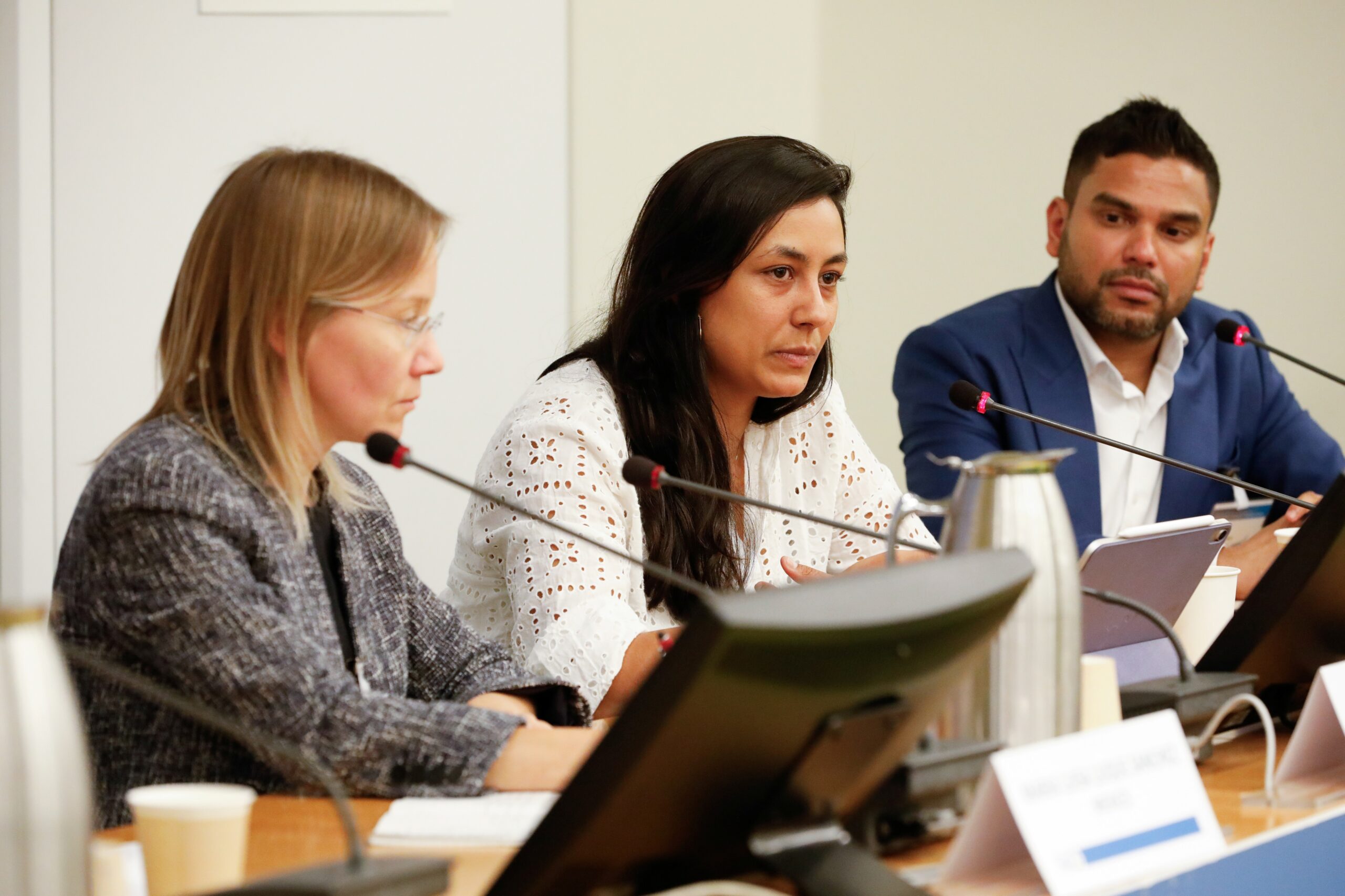
The discussion also uncovered that investor literacy regarding the operational realities of farmers leaves much to be desired. Traditional financial products often fail to reflect the constraints faced by smallholders that affect their risk tolerance. Standard short-term credit expectations clash with the cash-flow realities of purchasing cattle or establishing silvopastoral systems. Factors that affect cash flow, such as seasonal production cycles, exposure to climate and natural risks, and heterogeneous production systems, are insufficiently reflected in investment design.
Our experience of what works
Through our experience convening agri-finance stakeholders, working with agribusinesses, supporting fund design, and developing the climate finance roadmap, we have found that addressing the disconnect is possible with innovative approaches.
LAC’s livestock sector can benefit from blended finance vehicles that aggregate patient capital from impact, development, and philanthropic sources and accept agriculture-appropriate returns over eight-to-fifteen-year timeframes.
Engagement models that combine tailored financial terms with embedded technical assistance can be particularly effective by building trust with farming communities skeptical toward financial institutions.
For instance, the SPV for Silvopasture Scaling, developed by The Nature Conservancy with support from CPI, uses a vehicle structure that pools patient capital, underwrites transition costs, and provides technical support to ranchers adopting silvopastoral practices across Colombia and the broader LAC region. The instrument was specifically designed to address the core barriers of Colombian ranchers: lack of access to capital and debt aversion. Finance is not deployed as debt but as a profit-sharing agreement, creating a mechanism that meets farmers on terms that are comfortable and viable for them.
In another example in Colombia’s Orinoquía region, Hacienda San José (HSJ), supported by the &Green Fund, targets large-scale sustainable livestock transformation. With &Green’s backing, HSJ aims to expand sustainable management practices across approximately 180,000 hectares by the end of the loan period, including over 13,000 hectares dedicated to forest conservation. It co-develops transition plans tailored to each investee and disburses loans based on predefined KPIs, creating a transparent and efficient environment that works for farmers and funders.
Both instruments share three essential design elements that have contributed to their success:
1. Patient capital that matches timelines for sustainable livestock transitions. The SPV deploys long-term, flexible financing with returns intentionally back-ended and linked to productivity and carbon outcomes, reflecting the gradual nature of silvopastoral system development. Similarly, &Green uses a long-term senior loan of up to 12 years, designed to align with the implementation timeline of sustainable cattle ranching transitions. Another approach that an audience member emphasized was the use of guarantees that enable longer lending terms.
2. Diversified revenue streams that improve overall investment returns. The SPV aims to generate revenue through high-quality carbon credits based on enhanced vegetation, tree cover, and soil carbon sequestration. The HSJ project combines impact investment with carbon credit revenue, creating financial viability for sustainable cattle production while restoring degraded land. However, as participants noted, smallholder farmers rarely capture carbon market benefits due to challenges with aggregation and technical barriers. Successful models must actively address these obstacles.
3. Embedded technical assistance (TA) to build farmers’ capacities. Silvopastoral transitions require new knowledge, behaviour change, and ongoing support. Both the SPV and HSJ projects include TA programs that work closely with farmers to reduce the risk of implementation failure. Maria Luisa Luque Sanchez, Co-Founder and Co-CEO of Nuup, shared from her experience that “demonstration plots are essential to de-risk the adoption of new techniques by producers, while technical assistance to lenders builds their capacity to assess livestock portfolios and understand sustainable practices.”
Learnings from the roadmap
These examples demonstrate that blended finance’s primary value lies in absorbing early transition risk and smoothing delayed returns, rather than subsidizing production itself. This aligns with the roadmap’s broader findings: long investment horizons, upfront costs, and perceived risk rather than a lack of technical viability are the main constraints to scaling sustainable livestock systems in LAC.
Closing the sustainable livestock funding gap requires not only new forms of capital deployment, but also new ways of thinking. Along with patient, context-appropriate financial instruments that align with producer realities, it also demands robust measurement systems that make impact transparent without imposing prohibitive costs, and policy coherence that supports rather than undermines sustainable transition.
We thank our speakers for sharing their time, expertise, and valuable insights during the panel:
- Angela Falconer, Senior Consultant, CPI
- Carolyn Opio, Animal Production and Health Officer, FAO
- Sajeev Mohankumar, Senior Technical Specialist, FAIRR Initiative
- Maria Luisa Luque Sanchez, Co-Founder & Co-CEO, Nuup
